


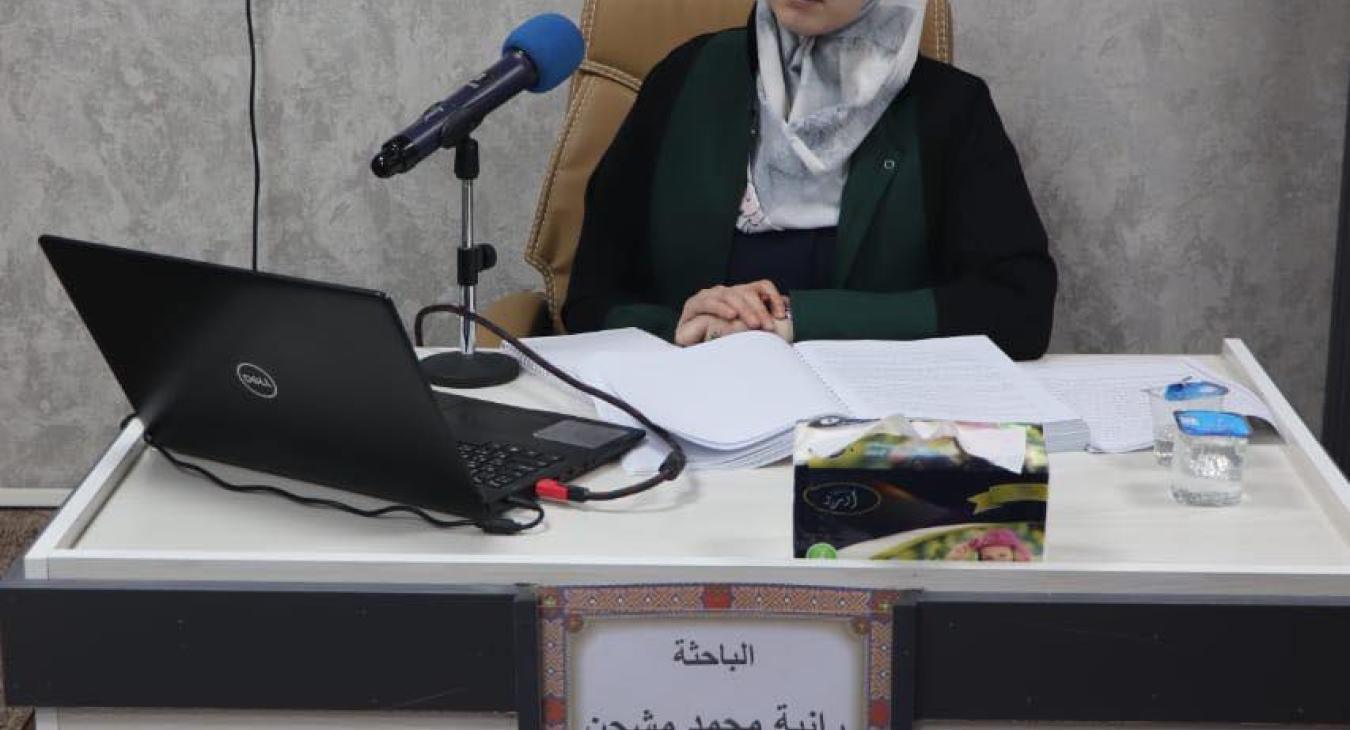
A doctoral thesis at the College of Law, Department of Private Law discusses the problems of litigation in intellectual property disputes. With the blessing of God Almighty, the College of Law discussed on Thursday, 10/5/2023, a doctoral thesis in private law, tagged ((Problems of litigation in intellectual property disputes - a comparative study)) and submitted by the doctoral student (Rania Muhammad Moshan). The topic of the problems of litigation in intellectual property disputes raises great importance due to its nature. Which is characterized by the specificity of its distinction over all other rights in that it is linked to what emerges from human thought in terms of the product embodied in new ideas that represent creativity and innovation, which in turn contributed to expanding the cultural base and cognitive horizon of society, so that it increased its sophistication on both the literary and industrial levels. Therefore, the purpose of this study is to closely identify the nature of intellectual rights and investigate the possibility of resorting to alternative means and traditional judiciary to resolve disputes arising from them. Although the legislator surrounds intellectual property with a legislative system, it Turning a blind eye to many issues related to these rights, which stand as an obstacle preventing opponents from resorting to them, especially with regard to the infringement of the literary right, which represents the personal character and creative imprint of the owner of the intellectual right who created it and embodied it in a tangible material form that can be utilized and benefited from. Therefore, we discussed methods of settling intellectual rights disputes by dividing the study into two chapters. The first chapter covers alternative means by setting a definitional framework for intellectual rights disputes, starting with their definition and explaining their basis and conditions, passing through Its parties and ending with its content, in addition to examining alternative means represented by mediation, conciliation, reconciliation and arbitration and the extent of their contribution to laying the foundations that can be followed for settlement between opponents. Then we moved to the second chapter to shed light on jurisdiction in resolving intellectual rights disputes, as we focused the research on litigation, both traditional and procedural, by explaining the most important dilemmas facing litigants related to the conditions and parties to the lawsuit. Then we explained the urgent and state judiciary and the possibility of resorting to them in intellectual rights disputes, and what precautionary measures can be taken in order to preserve these rights? Finally, we discussed the possibility of establishing a judiciary specialized in intellectual rights disputes by demonstrating its effectiveness, the concept and basic foundations it entails to enhance its existence, and the resulting effects that can be described as positive when compared to the judiciary that is not specialized in these disputes. The research into the specialized judiciary was not limited to the traditional judiciary only, but rather we supplemented it by examining the possibility of creating an electronic judiciary. We also studied the role of the specialized electronic judiciary in the possibility of intervening and working by alternative means to resolve intellectual rights disputes, in a way that is consistent with the role of the judiciary emphasized by the Iraqi Constitution. The legislator was keen to organize it and take into account its provisions in the Iraqi Judicial Organization Law and the Iraqi Procedures Law. The discussion committee consisted of: Prof. Dr. Saad Hussein Abd, Chairman, Prof. Dr. Nabaa Muhammad Abd, Member, Prof. Dr. Hamid Shaker Mahmoud, Member, Prof. Dr. Nafie Bahr Sultan, Member, Prof. Dr. Muhammad Latif Saleh, Member, Prof. Dr. Ziyad Tariq Jassim, Member and Supervisor. After extensive study of the thesis and the discussion committee hearing the student’s defenses for her thesis, the committee decided to accept it and grant the student a doctoral degree. A thousand congratulations to the student. For this effort you have made and for further advancement and scientific excellence, God willing. Media Division/College of Law