

University of Fallujah
Library Guide
College of Law
Prepared by
Librarian: Mohammed Ahmed Al-Issawi
Introduction
Praise be to Allah, the Lord of the Worlds, and prayers and peace be upon the Seal of the Prophets and the Leader of the Messengers, who was sent as a mercy to all creatures, and upon his family and companions.
It is now widely recognized that the library plays a fundamental role in university studies, especially as teaching methods have evolved. These methods necessitate the use of the library as an effective tool in implementing the prescribed curriculum. The role of the university professor has often been limited to guiding students to sources of knowledge, training them to gather facts, and fostering creative scientific thinking. Thus, it is fair to say that university studies rely on both the library and the professor, and neglecting or diminishing the role of either comes at the expense of the quality of the educational process.
Some studies have shown that university students face difficulties in using the library and familiarizing themselves with its contents, including books and references. Additionally, some are unaware of the services the library provides.
From this perspective, our library has prepared this guide to introduce students and beneficiaries to various aspects of its services and activities.
Establishment
The library was established in 2003 as a small hall within the college building. It has since expanded and developed in terms of space and collection. It now houses approximately 25,000 books, theses, and print and electronic periodicals.
Location
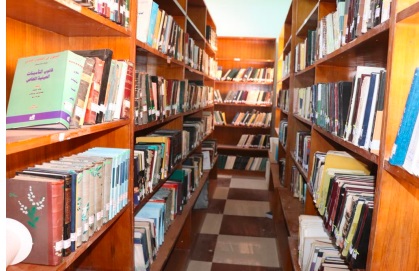
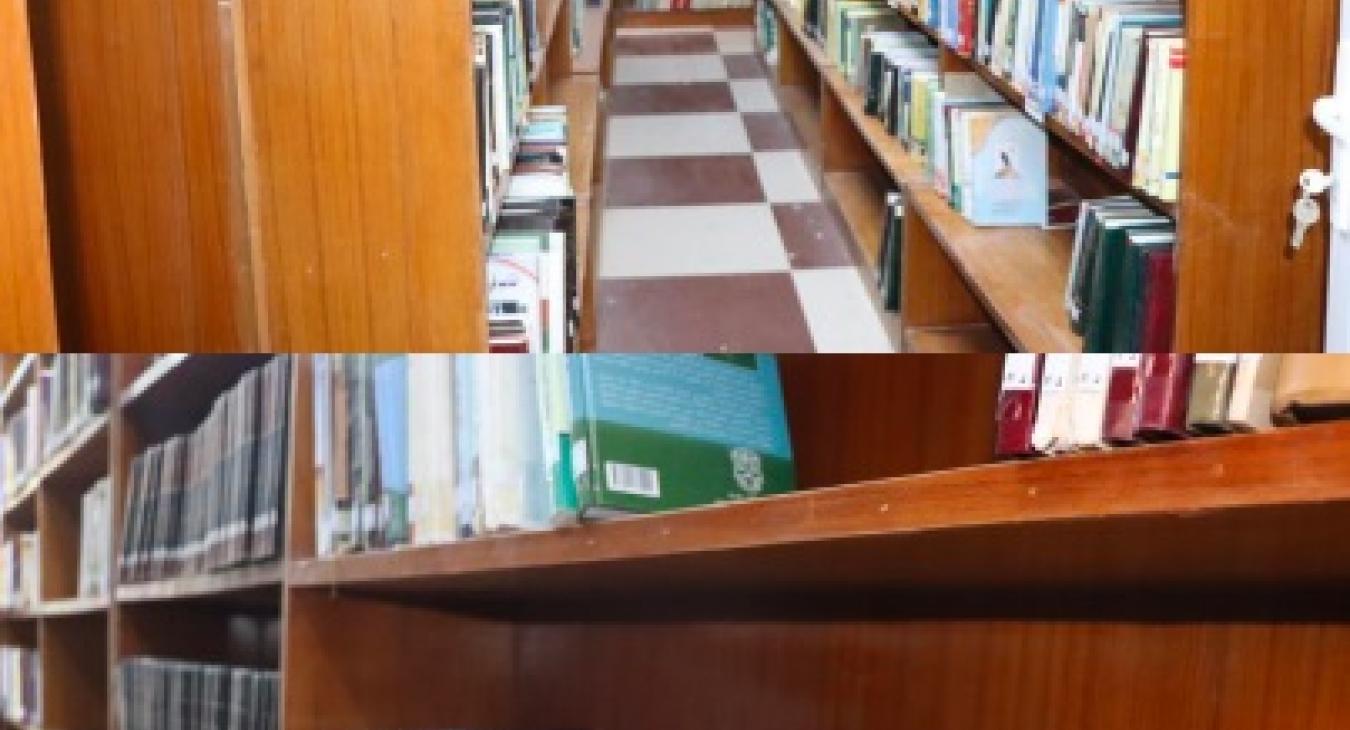
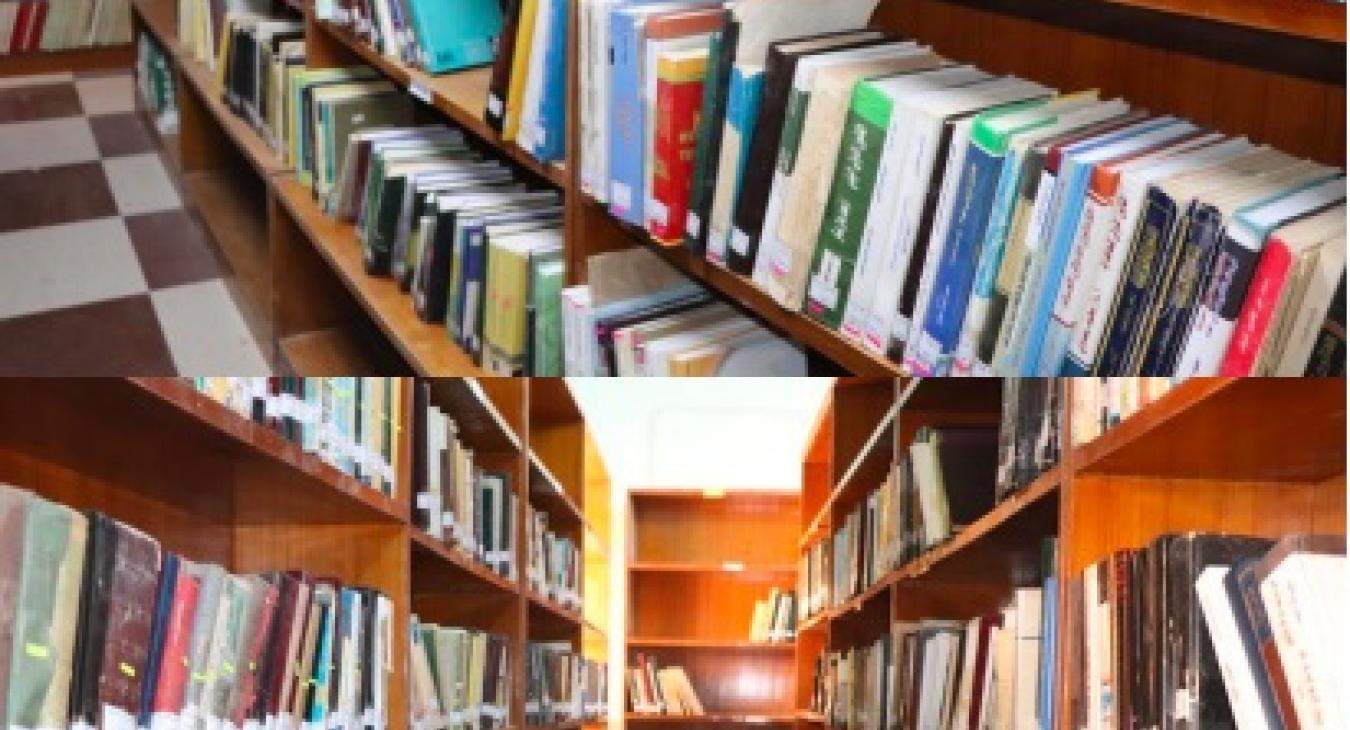
The library is located in the second building of the college. It consists of a large reading hall with 50 chairs and 8 reading tables, equipped with a 4-ton Contouri water cooler and two wall-mounted coolers. The second hall is a storage area with shelves for housing the library collection.
Objectives
The library aims to achieve the following objectives:
Support the curricula by providing information sources.
Serve the scientific research needs of professors, researchers, and postgraduate students to keep pace with local and global research developments.
Provide up-to-date and diverse information sources for beneficiaries.
Collaborate with other libraries and institutions to offer information services to users.
Deliver the best information services through both traditional and electronic means.
Working Hours
The library is open to readers and beneficiaries during the academic year from 8:00 AM to 2:00 PM.
Services
Book Borrowing
If a reader wishes to borrow a book, they must check the general catalog cards and the automated catalog to obtain the book’s classification number, author’s name, and title. This information is recorded on special forms and submitted to the lending staff, who retrieve the book. The book is then ready for borrowing, and the borrower signs in the designated space.
Current Awareness Service
The library announces newly acquired books, journals, electronic libraries, theses, and dissertations to keep its patrons informed of the latest additions.
Electronic Library
An electronic library has been established in the Law Library, containing around 15,000 PDF titles, including e-books, research papers, and university theses in the field of law.
Automated Catalog
The traditional catalog has been converted to an automated system using the KOHA system.
Lending
Books are lent for use inside and outside the library and must be returned by the due date.
Rules and Instructions for Borrowing
No book or publication may be borrowed without presenting a college ID.
Borrowing, returning, and renewals must be done in person by the borrower.
Faculty members and postgraduate students may borrow up to 3 books at a time for three weeks.
Students may borrow up to 3 books for one week, with the possibility of one renewal only.
Students are not allowed to enter the book storage areas without special permission from the librarian.
Procedures for Late Returns, Loss, and Clearance
All borrowers must return borrowed items by the due date without the need for a reminder. Otherwise, a fine of 500 dinars per day will be imposed.
If a borrower fails to return the book(s) or pay the required fine, the library will suspend their borrowing privileges, and the matter will be referred to the department and dean for appropriate action.
In case of loss of a book, the borrower must:
a. Either replace it with an identical copy or a newer edition.
b. Or pay double the price recorded in the library’s official register or the market value at the time of loss.
c. The same rules apply if the book is torn or defaced in a way that affects its physical or academic value.
Reference books, university theses, and periodicals may not be borrowed outside the library building; they are for in-library use only and must be returned before the end of the library’s working hours.
Reading inside the library must be done individually; loud talking or discussion is strictly prohibited.
Smoking is not permitted inside the library for readers and visitors.
How to Use the Card Catalog
If a reader wishes to obtain any book from the library, they must first go to the general catalog of books, which consists of multiple aluminum drawers containing cards for the library’s contents. Each card contains information about a specific book, arranged as follows:
Author’s name (starting with the famous name, family name, or the last part of the name).
Book title and edition number.
Place of publication, publisher, and year of publication.
Number of pages or volumes.
Call number (book number), consisting of the subject number and author number, located in the upper right corner for Arabic books.